The Role of Flashlights in Search and Rescue Operations

Flashlights are indispensable tools in search and rescue (SAR) operations, serving as critical enablers of efficiency, safety, and success in high-stakes environments. Their primary function—illumination—extends far beyond basic visibility, addressing the unique challenges of diverse terrains, unpredictable weather, and time-sensitive missions.
In low-light or no-light conditions, such as night rescues, cave explorations, or disaster zones with disrupted power grids, flashlights transform darkness into navigable space. High-lumen tactical models cut through fog, smoke, or dense foliage, allowing rescuers to identify hazards like unstable debris, uneven terrain, or water obstacles. This visibility is vital for both the safety of SAR teams and the detection of survivors, who may be trapped under rubble or hidden in remote areas. For example, in earthquake aftermaths,定向 beams can penetrate cracks in collapsed structures, revealing signs of life that might otherwise go unnoticed.
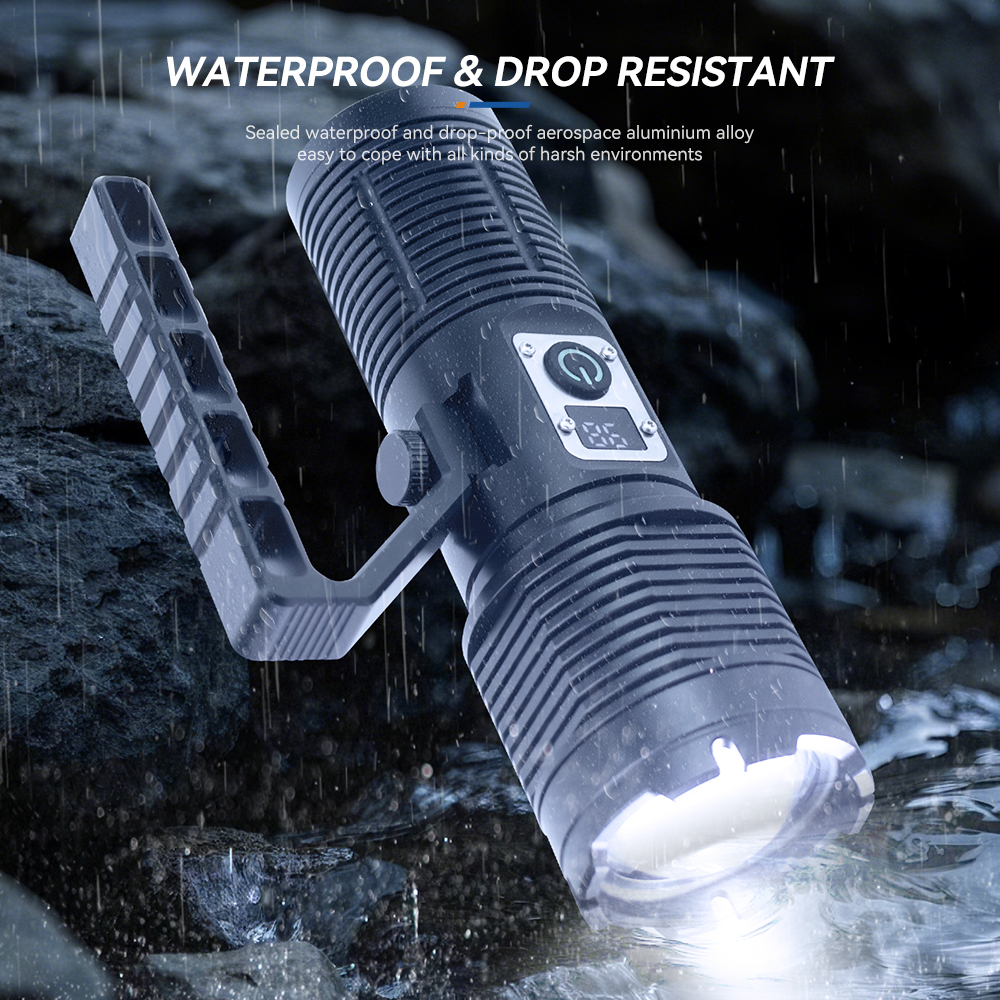
Beyond illumination, modern flashlights integrate features tailored to SAR demands. Many models include adjustable brightness settings, enabling operators to conserve battery life during extended missions or switch to strobe modes for signaling. Strobe functions serve dual purposes: disorienting threats in hostile scenarios and acting as distress beacons to mark team positions or guide air support. Additionally, durable, waterproof designs ensure reliability in harsh conditions, from monsoons to sub-zero temperatures, while ergonomic grips and lightweight materials reduce fatigue during prolonged use.
Flashlights also facilitate communication and coordination. In noisy environments, such as disaster sites with ongoing machinery or stormy weather, light signals can convey simple commands—e.g., a series of flashes to indicate "clear path" or "need assistance"—when verbal communication is impaired. This non-verbal exchange streamlines teamwork, ensuring that efforts remain synchronized even in chaotic situations.
For survivors, flashlights provide psychological reassurance. The presence of a beam cutting through darkness signals that help is nearby, reducing panic and increasing hope. Rescuers often use lower-intensity settings to avoid dazzling trapped individuals, creating a calmer environment for assessment and extraction.
Technological advancements have further enhanced their role. Rechargeable lithium-ion batteries extend operational time, while integrated USB ports allow for on-the-go charging via solar panels or portable power banks. Some flashlights now include UV light for detecting bodily fluids or hidden traces, aiding in locating missing persons. Others feature infrared modes for night vision compatibility, enabling stealth operations in sensitive situations.
In summary, flashlights are more than mere tools—they are lifelines in SAR operations. By bridging the gap between darkness and visibility, they empower rescuers to navigate hazards, communicate effectively, and deliver aid where it is most needed. As technology evolves, their capabilities will continue to expand, solidifying their status as an irreplaceable asset in saving lives.
How to Choosing the Right Automotive Repair Tool: Spotlight on the GS-4030A Portable Worklight
High Power XHP50 LED Work Light Rechargeable Multi Functional Working Light Outdoor Waterproof Portable Camping Light With Tripod